
An Overview of SARRC’s Youth Research
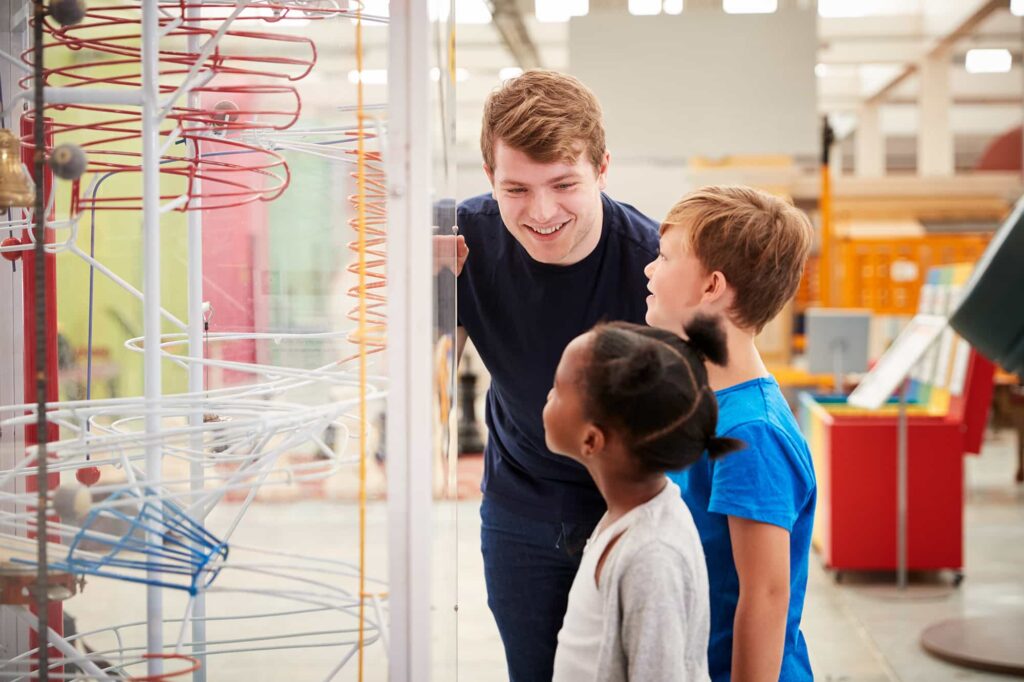
Improving STEM Learning Opportunities for Autistic Youth
Many autistic children and adolescents have strong interests in STEM fields (science, technology, engineering, and mathematics), but their access to learning opportunities outside of the traditional classroom may be limited. Sensory sensitivities, challenges with transitions, and social communication differences may make it more difficult for autistic individuals to have successful and engaging visits to science museums and centers. If they cannot take advantage of these learning opportunities, they may be less likely to pursue STEM academic or employment pathways.
Since 2019, NLN collaborators have been studying this issue . The project aims to improve inclusion at informal STEM learning settings through professional development training for museum educators and staff. Insights from initial findings are summarized below.
Do autistic youth face accessibility challenges in STEM learning settings?
Very little research has been conducted on the experiences of autistic youth during visits to STEM museums and science centers. For this reason, we conducted a parent survey about experiences at STEM museums. Recently published in the International Journal of STEM Education, findings indicated that parents of autistic adolescents reported lower inclusion, engagement, and impact of STEM museum visits compared to parents of children in the general population. This suggests the need for initiatives aimed at improving inclusion and accessibility.
What museum features contributed to inclusion for autistic teens?
Interview responses from teens and parents provided rich insight about museum features that contributed to perceived inclusion and impact of museum visits.
- Interactivity: Teens and parents reported that they valued interactive exhibits that they could touch and explore, as well as staff who personalized interactions to the family’s needs.
- Freedom to engage: Families appreciated museum features that allowed teens to safely explore the museum without prompting from their parents. Examples include staff guided tours, audio tours, and well-designed spaces that permitted teens to safely explore while their parents monitored from a distance.
- Absence of Crowds: Many families reported that visits during low traffic times resulted in increased engagement and more successful visits. To help families plan successful visits, museums could share low traffic times on the accessibility sections of their websites.
- Accommodations and Visual Supports: Families appreciated when museums provided accommodations for sensory sensitivities (e.g., noise cancelling headphones; sensory spaces) and signage to indicate potential sensory aversions.
What’s next?
In Phase 2, autistic teens and their parents will visit the museums and rate their experiences before and after museum staff complete the training.
Related Blogs
Webinar Recap: Reflecting on Community Attitudes Toward Autism and Advancing Inclusive Museum Practice
Welcome to the NeuroInclusive Learning Network

Planting Seeds for Culture Change: Making Museums More Inclusive for the Autism Community
Ready To Get Started?
Tell us about yourself and which of our services you are most interested in. We are excited to have you join us.